Know Your Wings
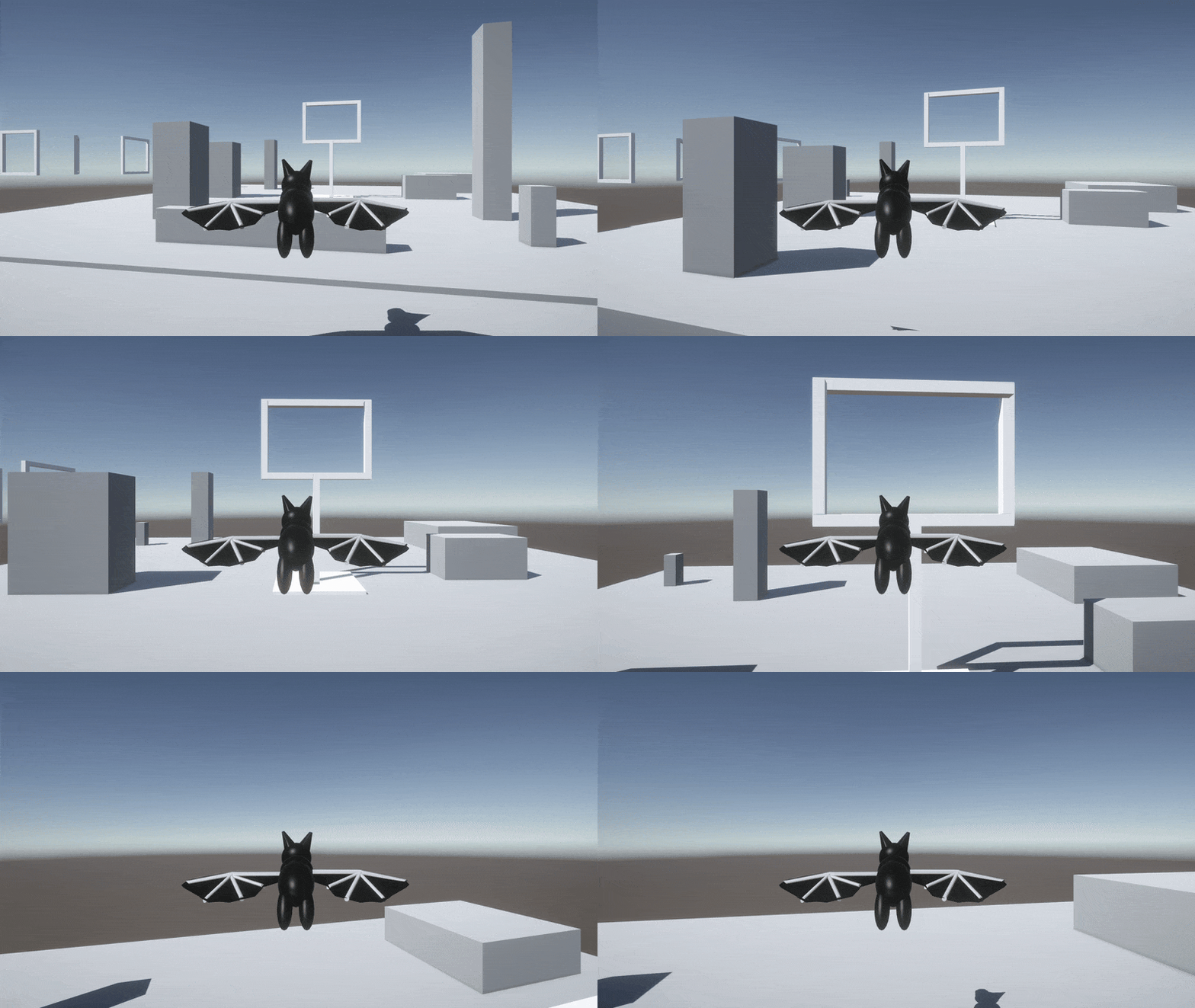
Grab Blood Drops and take to the skies like never before in this bizarre flight simulator!

Roles: Game Designer, Programmer, Artist.
Tools used: Unity, Google Drive, Trello, Miro, Adobe Photoshop, Blender.
Group project – 7 members, including me.
Know Your Wings is a game we created during the work term between my 3rd and 4th years at Sheridan College, in collaboration with the University of Toronto. It's a game where you fly around as a bat collecting Blood Drops scattered around the environment, but with a unique control scheme, as flapping each wing is mapped to its own individual button. Mastering flight with this unusual setup is the game's main challenge.
Play it here!
Roles
Game Designer
I created the initial concept, and it was one of the seven game ideas out of the dozens submitted that was selected to be developed into a full game. Since the game revolved around a very unusual and imprecise form of flight, I figured large open environments would be necessary, and due to our very limited time and resources to make the game, there couldn't be many. This led me to proposing we use one map divided into zones that the player can travel between, with a gameplay loop that focused on completing challenges in these areas to acquire collectables, of which a certain amount is needed to beat the game, inspired by 3D collectathon platformers.


Artist
Though I didn't start as an artist for the project, I became one due to circumstance. In the lead up to the game's Alpha milestone, our dedicated artist was unable to work, and many environmental assets were behind schedule. For the project's sake, I took on a temporary artist role, despite my lack of skill or experience with software such as Photoshop or Blender. Thanks to my initiative and quick learning, the assets were able to be finished in time for the Alpha build.


Challenges and Lessons Learned
Being a very movement-heavy game, we were making frequent tiny adjustments to the player's physics. Additionally, due to how unconventional the game's movement system was, it didn't agree with a lot of people, who made this known in their feedback. We were constantly debating what we could and couldn't change about the game's design without losing its core. Even in the final weeks of development, we were still making smaller revisions to the player's abilities and controls. Similar games in the future should ideally be developed under a much longer timespan to give us more time to iterate and settle on something we can be happy with before moving on.
Another problem was how we were going to teach unusual controls and movement mechanics to players who likely had no similar games to use as a frame of reference. We knew visuals were the best option, however, text was also needed to add extra clarification that visuals couldn't convey. We also had to space out the tutorials in the starting area for players to process the information, and also time without any tutorials on-screen so they better could notice new ones appearing. Systems this obtuse require lots of time and experience for players to understand, so for similar games in the future, the level of understanding needed to beat them will be much lower, with far less being demanded of the player.